Google Ads in Arlington, TX: DIY vs Hiring an Agency
I ran Google Ads for 22 DFW service businesses including Arlington. Here is what you can set up yourself this weekend and the signs you need an agency.

Edward Chalupa
Founder, Whtnxt · Dallas, TX

A heating and air company in Arlington called me last October because they were losing money on Google Ads and could not figure out why. They had one campaign, no negative keywords, and a generic contact form as the landing page. They were spending $1,800 a month and getting phone calls that did not convert because the page promised nothing specific to Arlington. The account was not bad because Google Ads is hard. It was bad because nobody had done the basics.
Here is the honest answer on Google Ads in Arlington: you can absolutely run a profitable account yourself if you serve one city, keep a tight budget, and do the setup work I outline below. You will hit a wall around $2,500 a month in spend or the moment you start serving three or more DFW cities. I have run ads for 22 DFW service businesses across Arlington, Fort Worth, Dallas, and the mid-cities, and I know exactly where the DIY line sits.
What Can You Do This Weekend?
Most Arlington business owners do not need an agency to get their first profitable month. They need a weekend of disciplined setup. Here is the exact checklist I run through when I take over a messy account, in the order that matters.
1. Structure campaigns by service and city.
One campaign for everything is the number one reason Arlington accounts bleed budget. A plumber in Arlington should not have the same campaign as a plumber in Mansfield. Google matches “emergency plumber arlington tx” differently than “emergency plumber mansfield tx”, and if both live in one campaign, your ads get shown to the wrong person with the wrong message.
Split it like this:
Campaign: Plumbing Arlington
  Ad group: Emergency plumbing
  Ad group: Water heater repair
  Ad group: Drain cleaning
Campaign: Plumbing Mansfield
  Ad group: Emergency plumbing
  Ad group: Water heater repair
Each ad group gets its own keyword list, its own ad copy that names the city, and its own landing page when you can swing it.
2. Add negative keywords before you add anything else.
This is the single highest-impact move in the entire account. Google’s own documentation covers how negative keywords work{target=“_blank”} and how to build a list that filters out search terms that will never convert. For a home service business, add these from day one:
-free
-jobs
-salary
-hiring
-training
-certification
-how to
-what is
-diy
-repair manual
-replacement cost calculator
-weather
-today
I built a service business account once that was spending 40% of its budget on irrelevant clicks because nobody had ever added a single negative keyword. That is not an exaggeration. The fix took twenty minutes.
3. Turn on call tracking so you know which keyword produced the call.
If you cannot tell which keyword drove the phone call, you cannot scale what works. You can start with Google’s free call tracking in the ads interface, or use a service like Twilio{target=“_blank”} to swap numbers per keyword. For a DIY setup, start with Google’s built-in call reporting. It is not perfect, but it tells you which ad groups actually ring the phone.
Info: Google’s free call reporting is enough for your first 90 days. Move to Twilio or a call tracking platform when you have more than one person answering and you need to know which dispatcher got which lead.
4. Write ads and landing pages that name Arlington.
“24/7 Emergency Plumber in Arlington” beats “24/7 Emergency Plumber” every time. The people searching “plumber arlington tx” want proof you are local. Name the neighborhoods, mention the entertainment district, mention the stadium traffic if it matters for your service. A generic page converts at a fraction of the rate of a page that proves you know the city.
I wrote the full breakdown of how this works for service businesses in my 7 Fort Worth Google Ads strategies post. The same principles apply in Arlington, just swap the neighborhood names.
What Results Can You Expect Going Solo?
Let me be direct: if you follow the setup above, you can expect a cost per lead of roughly $45 to $65 for home service keywords in Arlington in the first 90 days, assuming a decent landing page and weekly negative keyword maintenance. That is not a promise, it is the band I have seen across the accounts I have fixed.
Here is what realistic solo results look like:
| Metric | DIY Realistic | Managed |
|---|---|---|
| Monthly spend | $500 to $1,500 | $1,500 to $5,000+ |
| Cost per lead | $45 to $65 | $31 to $54 |
| Time per week | 3 to 8 hours | 1 hour of review |
| Negative keyword updates | Weekly if remembered | Automated, continuous |
| Landing pages | 1 generic page | City-specific pages |
| Reporting | Manual screenshots | Automated weekly report |
The DIY ceiling is not budget, it is time. A business owner running their own ads usually spends 3 to 8 hours a week on the account: checking search terms, adding negatives, adjusting bids, building landing pages. That is time not spent running the business. For a one or two person shop, that trade can be worth it. The moment you have a crew and a schedule to manage, the math changes.
For an HVAC client in the mid-cities, the automated system I built dropped cost per lead from $87 to $54 in 90 days. The difference was not better bids. It was call tracking, negative keyword automation, and a landing page that actually matched the ads. I covered that build in detail in my HVAC lead generation system post.
Warning: The most common solo mistake is logging in once a month, seeing a big number in spend, and pausing everything. That kills accounts that were one negative keyword list away from profit. If you cannot commit to weekly maintenance, you are already at the agency decision point.
How Do You Know You Have Outgrown DIY?
I have taken over enough owner-managed accounts to recognize the exact moment DIY stops working. It is not a spend number. It is a cluster of signals:
- You spend more than 3 hours a week on ad account maintenance
- You serve 3 or more DFW cities without separate campaigns for each
- Your quality scores have sat below 6 for months
- You do not know which keywords drove the phone calls last month
- Your landing pages are generic templates that do not mention Arlington
- You have a crew, a schedule, and a stack of other responsibilities
When those pile up, the account degrades quietly. Wasted spend climbs, quality scores slip, and the person running it starts resenting the logins. That resentment is the real signal. If you dread opening the ads dashboard, you have outgrown DIY.
Tip: The cheapest time to hire help is before you burn the budget on a broken month, not after. A cleanup engagement on an account that is already bleeding is more expensive than a managed account that never bleeds.
What Changes When an Agency Takes Over?
Agency management is not magic. It is infrastructure. When I take over an Arlington account, the difference is the system around the ads, not the ads themselves:
- Call tracking on every keyword. Every phone call is attributed to the exact search term that produced it.
- Automated negative keyword updates. New irrelevant search terms get added to the negative list within 24 hours, not next month.
- City-specific landing pages. Arlington gets its own page, Fort Worth gets its own, Mansfield gets its own.
- Automated reporting. The client gets a weekly cost-per-lead report without opening the dashboard.
- Lead routing. Calls and form submissions route to the right dispatcher in seconds, not hours.
I built the n8n lead routing automation that handles the routing side of this, and I wrote up the account structure framework that keeps campaigns from turning into a mess. The agency value is not the bid tweaks. It is that the system runs itself and someone watches it every week.
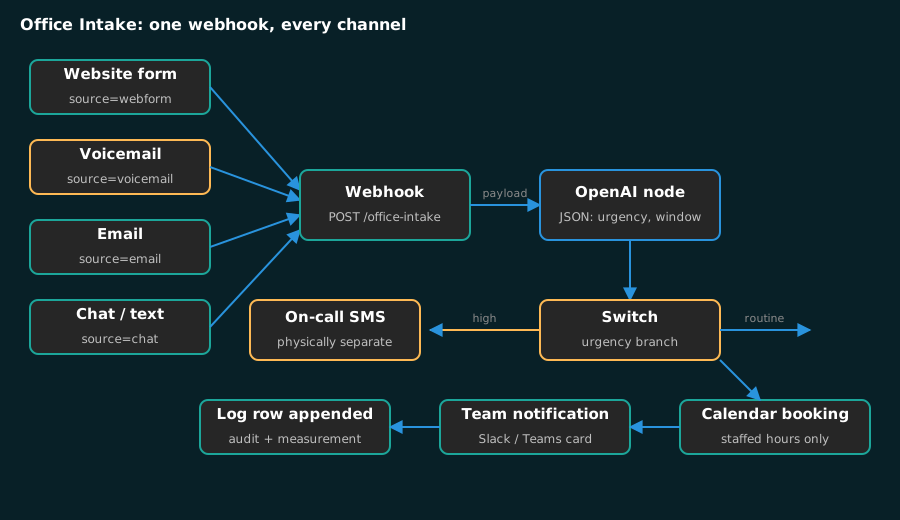
When a call does come in, the pipeline needs to do something with it. This is the flow I build for every managed account, from the click to the dispatcher:
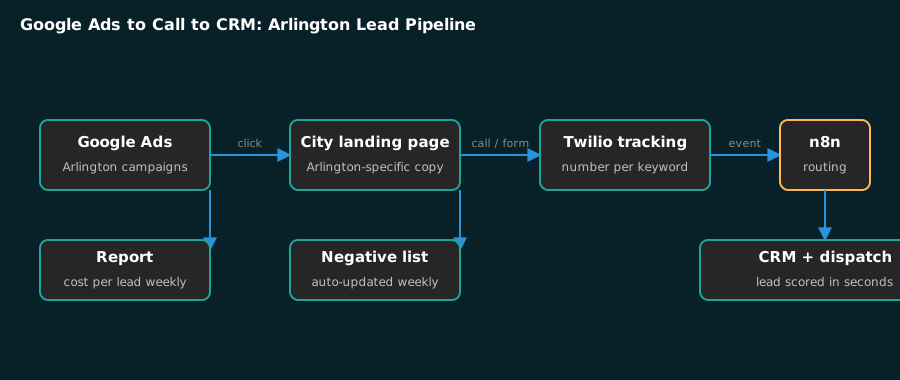
The automation layer is built on n8n{target=“_blank”}, which is where the weekly negative keyword updates and the cost-per-lead report get generated. That is the part you cannot buy inside the Google Ads interface itself.
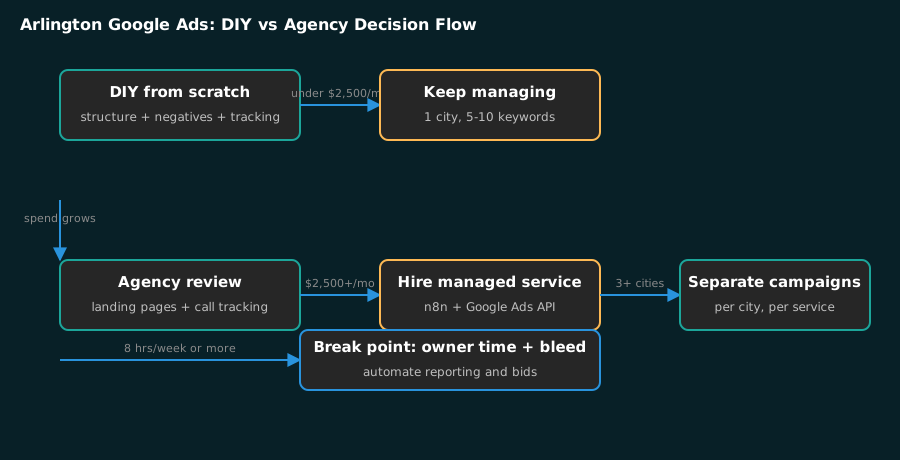
The decision flow above is how I talk through it with every DFW client. Under $2,500 a month and one city? DIY with discipline. Over that, or spread across cities, the managed route wins on cost per lead even though it costs more in fees.
How Does the Hybrid Model Work at Whtnxt?
Most of my DFW clients run a hybrid. They own the parts that are strategic, I build the parts that are technical. Concretely:
- They write the offers and approve the ad copy, because they know their service better than I do.
- I build the account structure, the call tracking, the landing pages, and the automation.
- They review a weekly cost-per-lead report I generate automatically.
- I handle negative keywords, bid adjustments, and landing page tests.
This is the paid search management model I run for Arlington and DFW service businesses. It sits on the same marketing automation services infrastructure I use for everything else: n8n, the Google Ads API, and proper account structure. If you need the lead side of the pipeline built too, that is the lead generation engagement, and it connects directly to the same system.
The hybrid works because the owner stays in control of the decisions that matter while the technical debt moves off their plate. That is the difference between hiring an agency and hiring a system.
The Bottom Line
Google Ads in Arlington is very doable yourself for the first $1,500 a month. Set up campaigns by service and city, add negative keywords before you spend a dollar, turn on call tracking, and write landing pages that name the city. Expect a cost per lead of $45 to $65 and 3 to 8 hours a week of maintenance.
The moment you cross $2,500 a month in spend, serve three or more DFW cities, or stop enjoying the logins, hire a managed service. The system around the ads matters more than the ads themselves, and that system is what an agency actually sells. If you want to see how the reporting side of this works, I wrote up the automated reporting dashboard I build for every managed client.
For more on where the DIY line sits for the rest of your marketing, I compared DIY marketing automation vs hiring a consultant in DFW, and the same boundary logic applies to ads.